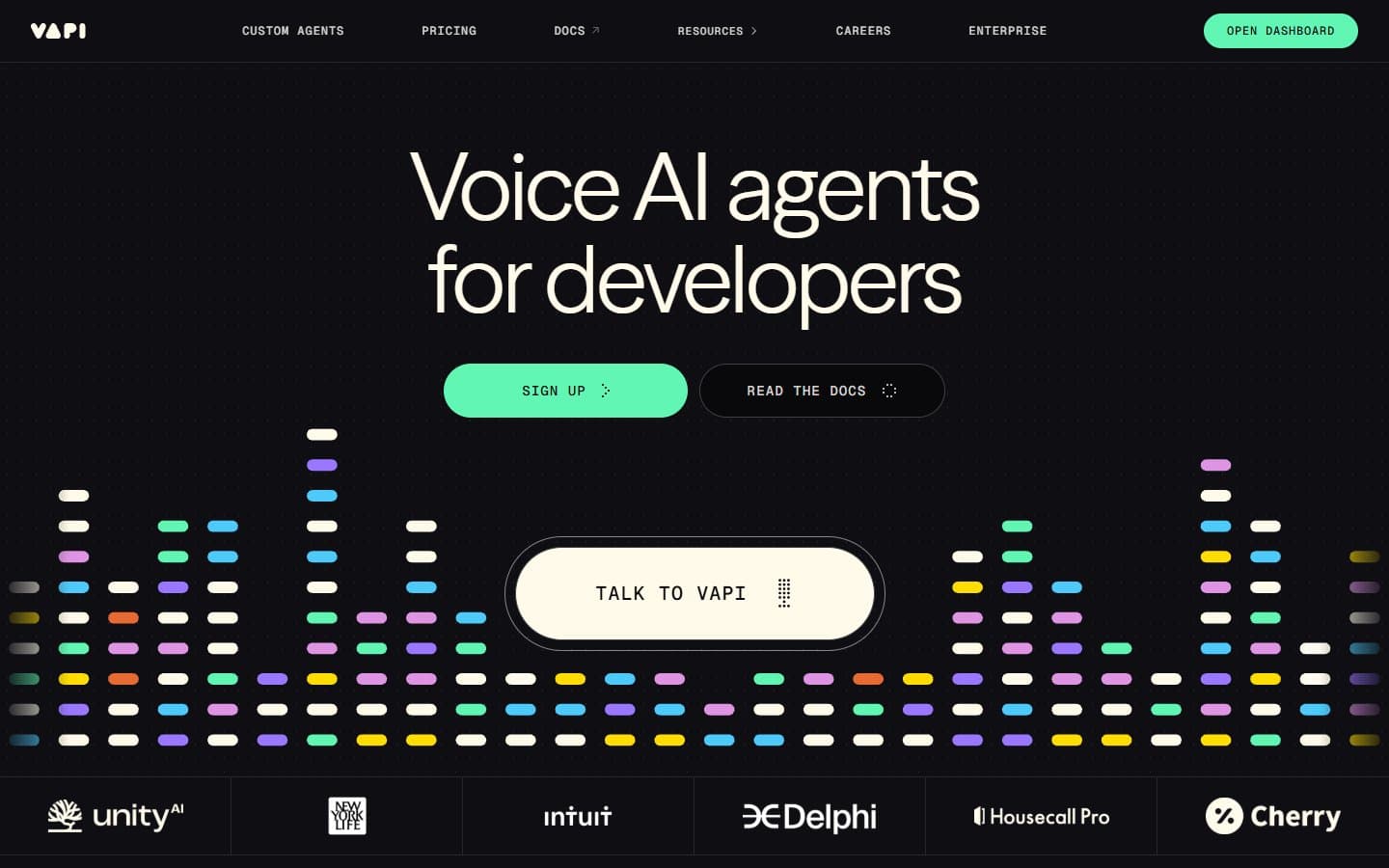
Vapi builds voice AI agents that actually sound good and respond fast enough for real business use. You'll need a developer to set it up properly, but the results are worth it. This is the tool to pick if you're serious about automating phone calls.
Who Vapi Is Best For
Vapi works best for businesses that handle lots of phone calls and have technical resources. Real estate agencies, healthcare practices, and service businesses with repetitive phone interactions see the biggest wins.
You need either an in-house developer or budget to hire one. The interface isn't built for non-technical users who want to click a few buttons and go live.
Agencies building voice AI solutions for clients will love the white-label possibilities and API flexibility.
What Vapi Actually Does
Vapi creates AI phone agents that can handle inbound and outbound calls. The AI understands speech, processes requests, and responds in natural-sounding voices.
You can clone custom voices to match your brand personality. The system connects to your existing tools through webhooks and APIs. Your AI agent can pull customer data or update your CRM.
Real-time transcription captures everything for later review. Call recording and analytics help you understand what's working and what isn't.
The platform handles phone number provisioning, so you don't need separate telecom services. Multi-language support covers international customers.
Vapi Pricing
Vapi charges $0.05 per minute of conversation with no monthly base fee. This pay-as-you-go model makes sense for most small businesses.
If your AI agent handles a 5-minute call, you pay 25 cents. A business taking 1,000 calls monthly at 3 minutes each would pay $150.
Enterprise customers get volume discounts and dedicated infrastructure, but pricing isn't public. You'll need to contact sales for quotes.
The free tier lets you test functionality. You'll hit usage limits quickly with real business volume.
What We Like
The voice quality impressed us most. Conversations sound natural, not robotic. Response times stay under 500 milliseconds, which feels like talking to a human.
Custom voice cloning works well. You can match your brand voice or create distinct personas for different use cases.
API documentation is thorough. Developers can integrate with existing systems without major headaches. Webhook support makes connecting to third-party tools straightforward.
Call analytics provide useful insights. You can see conversation patterns, common failure points, and customer satisfaction indicators.
The phone number provisioning saves time. You don't need to coordinate with telecom providers or manage separate billing.
What We Don't Like
The learning curve is steep for non-technical users. You can't just sign up and start taking calls without programming knowledge. The interface assumes you understand APIs and webhooks.
Pricing adds up fast with long conversations. A 20-minute support call costs $1. This might exceed human agent costs for complex issues.
Limited pre-built templates mean starting from scratch each time. Competitors offer industry-specific templates that speed up deployment.
The platform focuses entirely on voice. If you need text chat or email automation, you'll need additional tools.
Error handling could be better. When the AI gets confused, it doesn't gracefully transfer to humans. It doesn't provide clear next steps either.
How Vapi Compares to Alternatives
Eleven Labs offers similar voice quality but lacks the full phone system integration. You'd need to build more infrastructure yourself.
Dialogflow provides better pre-built templates and easier setup for non-technical users. But voice quality and response times lag behind Vapi.
Retell AI targets similar use cases with comparable quality. Pricing is similar, but Vapi's documentation and developer experience edge ahead.
AssemblyAI focuses on transcription and analysis rather than full conversational agents. It's not a direct competitor for phone automation needs.
Should Your Business Use Vapi?
Choose Vapi if you handle high call volumes and have technical resources to implement it properly. The voice quality and speed justify the learning curve.
Skip it if you're looking for a no-code solution or only handle a few calls monthly. The setup complexity outweighs benefits for low-volume use cases.
Consider it essential if you're building voice AI products for clients. The API flexibility and white-label options make client implementations much easier.
FAQ
How long does setup take?
Expect 2-4 weeks for a basic implementation with a skilled developer. Complex integrations with existing systems take longer.
Can I use my existing phone numbers?
Yes, you can port existing numbers to Vapi or use their new number provisioning. Porting typically takes 3-5 business days.
What happens if the AI can't help a caller?
You can program fallback options like transferring to human agents or taking messages. This requires additional setup and integration work.
Does it work in languages other than English?
Yes, Vapi supports multiple languages, but voice quality and response accuracy vary by language. English provides the best experience currently.