Most customer service software impresses in the sales demo and exhausts you by Tuesday morning. Freshdesk works the other way around.
Who Should Use Freshdesk
A five-person e-commerce team drowning in "where is my package" emails at 11pm needs exactly what Freshdesk built: a shared inbox where every support message lands visibly, accessible to whoever is working, with nothing disappearing into personal inboxes. That alone solves the chaos most small retail teams face.
Professional services firms — a 12-person accounting practice or boutique IT consultancy — benefit most from the knowledge base and ticket automation. When 40% of support emails ask identical questions, stop typing identical answers. Freshdesk builds self-service help centers and triggers automatic responses for common queries, returning afternoons to your team.
Startups between 10-40 employees face a timing problem: support volume outpaces hiring. Freshdesk scales through that phase without punishment. The free plan lasts months, and upgrades make financial sense.
What It Does
Freshdesk converts every customer message — email, social, live chat, phone — into trackable tickets your team can assign and monitor. "Did anyone reply to Dave's email?" conversations end. Every ticket carries status, ownership, and history.
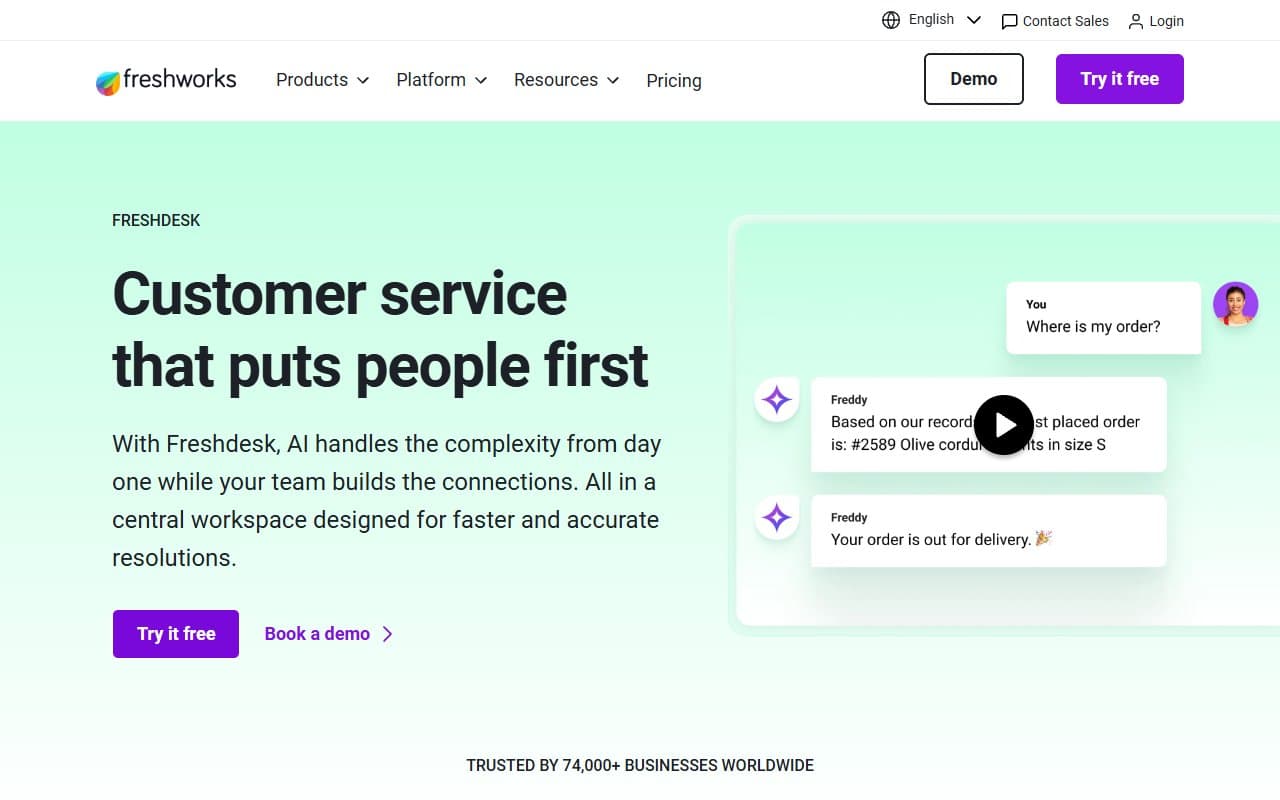
Automation rules sort and route tickets without human intervention. Refund requests reach your billing person automatically. Technical complaints get urgent tags. Freddy AI reads incoming tickets and suggests replies based on previous successful responses. New team members answer complex questions confidently on day three.
Reporting dashboards track response times, ticket volumes, and backlog locations. The numbers tell you whether to hire someone or reorganize Monday workflows.
Pricing
Free includes unlimited agents, shared inbox, basic ticket management, and knowledge base. This functions as a complete system, not bait. Teams under five people run here for months.
Growth at $15/agent/month adds automation, custom ticket views, and time tracking. Buy this tier. The automation rules save more time weekly than they cost monthly.
Pro at $49/agent/month adds custom reporting and round-robin assignment. Teams above fifteen people need this. Smaller teams pay for unused features.
Enterprise at $79/agent/month serves operations larger than most readers will run. Skip unless you employ a dedicated support manager.
What Works
Automation that non-technical people can configure. Most helpdesk automation requires programming knowledge. Freshdesk's rule builder uses plain English logic that office managers master in an afternoon. The template library saves two hours weekly once properly loaded.
Freddy AI improves through use. Week one suggestions feel generic. Week four suggestions read like trained team member responses. It accelerates first drafts without replacing your voice.
Setup requires no consultant. Freshdesk works within an hour of installation. The setup wizard covers essentials without overwhelming, and defaults need no immediate changes.
What Fails
Reporting stays shallow until Pro tier. Growth plan dashboards look detailed but offer limited customization. Headline numbers appear easily, but specific breakdowns — ticket volume by product category over 90 days — require Pro pricing. Growing businesses making staffing decisions hit this limitation hard.
Live chat integration feels bolted-on. Connecting Freshchat to main ticket workflow requires unnecessary steps. It functions eventually, but feels like stitching separate products together — because you are.
Comparisons
Zendesk offers more depth at higher cost with steeper learning curves. 40-person companies with dedicated support managers benefit from Zendesk's complexity. Everyone else gets 80% of Zendesk's value from Freshdesk at fraction of price and setup time.
Help Scout provides cleaner interfaces for smaller teams doing relationship-based support. Six-person professional services firms knowing clients by name might prefer Help Scout's approach. Freshdesk wins on automation depth and free tier value.
Zoho Desk competes on price and suits existing Zoho users. Otherwise, Freshdesk offers better interface design and superior AI performance.
The Verdict
If you run retail or service business handling repetitive support requests from a shared Gmail inbox with color-coded labels, switch to Freshdesk this week. Start free, run one month, then upgrade to Growth when automation needs exceed free tier limits — you'll recognize this moment immediately.
High-touch B2B operations where every conversation builds relationships should avoid Freshdesk's ticket-centric approach. Help Scout or well-organized CRM systems serve relationship-dependent businesses better.
Everyone else — retail teams drowning in order emails, consultancies copy-pasting identical replies, startups realizing nobody tracks who answers what — should choose Freshdesk regardless of budget.
Common Questions
Does the free plan have catches?
No significant ones. Unlimited agents and core features continue indefinitely. Automation, where real time-saving happens, requires paid Growth plan. Teams handling 25+ daily tickets upgrade within the first month.
How long does setup take?
Basic working setup — shared inbox connected, team invited, responses loaded — requires two to three hours. Full automation rules and knowledge base takes one day spread across a week. No technical knowledge needed.
Can it handle phone support?
Yes, through Freshcaller add-on. It integrates with tickets so call notes and recordings attach to customer records. Separate cost above Freshdesk plan, but integration beats third-party phone tools.
Should I switch from Zendesk?
If you pay Zendesk SMB rates without using advanced reporting or complex SLA management, switching saves money without losing meaningful functionality. Ticket history imports imperfectly, but switchers rarely return to Zendesk.
For teams exploring alternatives, our best customer service tools roundup covers live chat options like Crisp and Tidio for smaller operations, while Gorgias excels specifically for e-commerce stores on Shopify.