Who Should Use Zoho Desk
Most small business owners think of customer support software as something they'll figure out later. By the time they get around to it, emails are buried, customers are annoyed, and someone's using a personal Gmail account to handle complaints. If that sounds familiar, Zoho Desk was built for exactly this moment.
A 10-person e-commerce retailer handling returns and shipping queries across email, Instagram DMs, and a website chat widget gets immediate value here. The multi-channel ticketing pulls all of that into one queue — no more toggling between five tabs. A professional services firm handling client complaints will appreciate the SLA management tools, which set response time rules that actually hold your team accountable.
Zoho Desk earns its keep most with businesses already running Zoho CRM. When a support ticket arrives, your agent sees the customer's full purchase history, open deals, and previous interactions without leaving the screen. That context changes how support conversations go. It's the difference between a customer explaining their problem twice and feeling genuinely looked after.
What It Actually Does
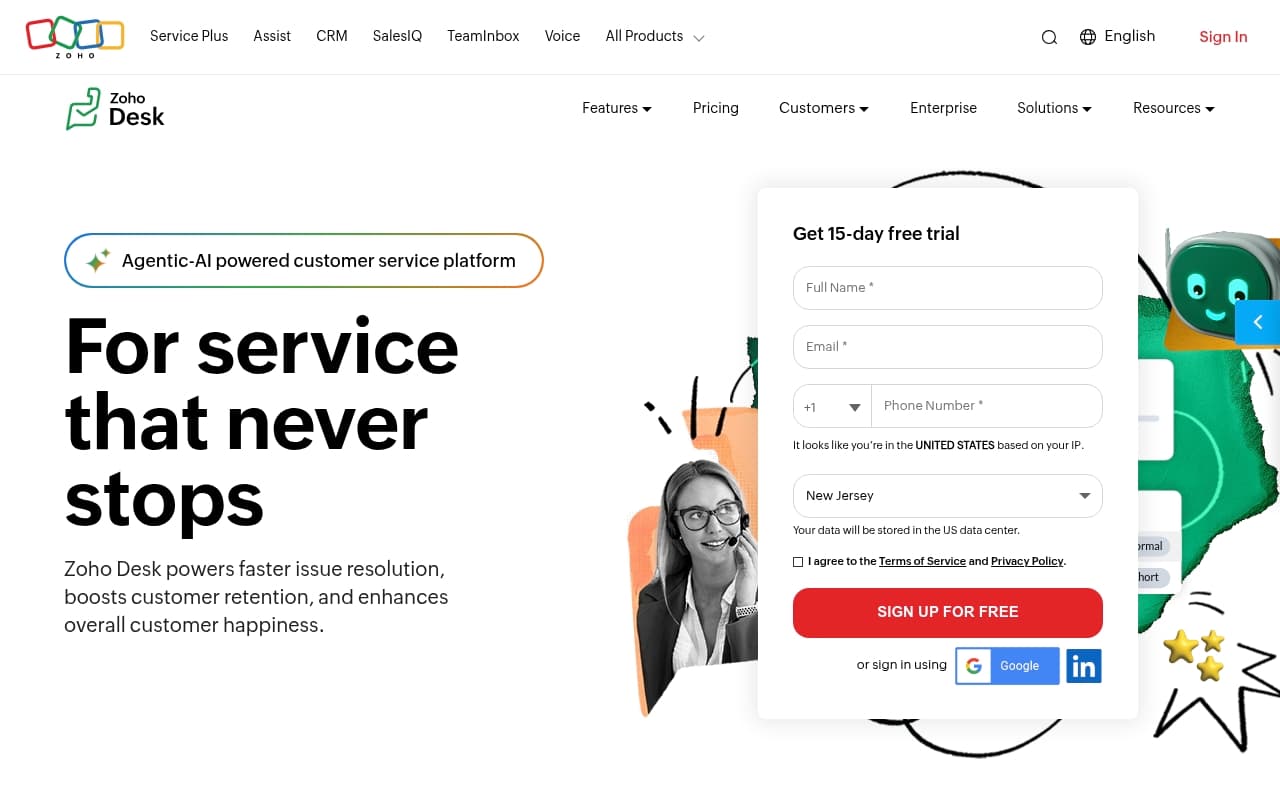
Zoho Desk turns every customer message into a trackable ticket. Someone emails you with a problem, it becomes a ticket. They DM you on social media, same thing. A ticket has a status, an owner, a deadline, and a history.
Your team works through the queue. Tickets get assigned, replied to, escalated if needed, and closed when resolved. Managers can see who's overwhelmed, which issues keep repeating, and whether the team hits response time targets.
The Zia assistant suggests replies, flags tickets that look urgent, and helps customers find answers themselves through a self-service portal before they ever reach a human. None of this requires technical setup — if you can use Gmail, you can use Zoho Desk within a day.
Pricing
Free Plan gives you three agents, email ticketing, and basic reporting. It's genuinely useful for very small teams just getting started, but the channel limitations will frustrate you quickly. No social media integration, no live chat. Fine for month one.
Express ($7/agent/month) adds chat, better automation, and more reporting. This tier exists to bridge the gap and doesn't add enough to justify holding at it long.
Standard ($14/agent/month) is where most small businesses should land. You get multi-channel support, SLA management, the self-service portal, and enough automation to stop doing repetitive work manually. This is the sweet spot.
Professional ($23/agent/month) adds multi-department support and advanced reporting. Worth it if you've got distinct teams — say, sales support and technical support running separately. Overkill for a five-person business handling general enquiries.
Enterprise ($40/agent/month) brings in Zia at full power, custom dashboards, and deeper CRM integration. The price is fair for what you get, but most small businesses won't exhaust the Standard tier before needing to think about this one.
What Works Well
The Zoho CRM integration is genuinely tight. Most software integrations are glorified data imports that break every third week. The Zoho Desk and CRM connection is native, and it shows — ticket context pulls through instantly, and closing a ticket can update a CRM record automatically without any workflow gymnastics.
SLA management that actually works. You can set rules like "respond to all billing issues within two hours" and the system will flag, escalate, and report on breaches without you babysitting it. For a business owner who can't monitor support all day, this is the feature that quietly earns its keep.
The self-service portal reduces ticket volume noticeably. Build out a decent knowledge base, and Zia will start steering customers toward answers before they submit a ticket. Teams that invest two or three hours building their FAQ content typically see ticket volume drop within the first month.
What Does Not Work
Setup is not as simple as Zoho implies. The feature depth that makes Zoho Desk useful also makes the initial configuration genuinely confusing. Expect to spend a full day — not an hour — getting channels, automations, and SLAs set up correctly. The onboarding guidance is patchy at best.
Outside the Zoho ecosystem, it loses its edge fast. If you're running HubSpot CRM, Shopify, and Slack, integrating Zoho Desk feels like forcing the wrong puzzle piece. The native advantages disappear, and you're paying for a mid-tier helpdesk competing against Freshdesk and Help Scout on features alone — a fight it doesn't always win.
How It Compares
Freshdesk is the most direct competitor. It's easier to set up, has a stronger free tier for teams with more than three agents, and doesn't assume you're in a specific ecosystem. Choose Freshdesk if you want to be running within two hours and you're not on Zoho CRM.
Help Scout targets teams where tone and relationship matter more than ticket volume — consultancies, agencies, high-touch service businesses. It's simpler, friendlier, and more expensive. If your customers expect a personal touch and you're handling under 50 tickets a day, Help Scout wins on experience.
Zendesk is enterprise software with a small business price tag slapped on. The feature set is deeper, but the complexity and eventual pricing will outpace a 20-person team's patience and budget within 18 months.
The Verdict
If you run a business on Zoho tools already — CRM, Books, Projects, any of them — Zoho Desk is the obvious choice and you're probably leaving time and money on the table by not using it. The Standard plan at $14 per agent delivers a complete support operation, and the CRM connection alone justifies the switch from whatever inbox workaround you're currently using.
If you're not in the Zoho ecosystem, the calculation changes. The setup friction is real, the integrations with third-party tools are workable but not elegant, and competitors like Freshdesk will get you productive faster.
Zoho Desk rewards businesses willing to set it up properly and stay within the ecosystem it was designed for.
Common Questions
Is Zoho Desk's free plan actually usable?
For a very small team — two or three people handling email support only — yes. You'll hit the limits within a few months as your business grows, but it's a legitimate way to test the system before committing money.
How long does Zoho Desk take to set up?
Budget a full working day for a proper setup: connecting your email and social channels, building your first SLA rules, and getting automations running. The basic version works in an hour, but basic won't save you any time.
Does Zoho Desk work if I'm not using Zoho CRM?
It works, but it's a weaker proposition. You'll get solid ticketing and multi-channel support, but the contextual customer data features that make Zoho Desk genuinely impressive won't be available to you.
What's the difference between Zoho Desk and Zoho CRM's built-in support features?
Zoho CRM has basic case management, but it's not built for high-volume or multi-channel support. Zoho Desk is a dedicated helpdesk — deeper queuing, proper SLA tracking, a self-service portal, and team-level reporting that CRM alone can't match.