Sarah's handmade jewelry business struggled to build trust with online customers until she started using Yotpo to automatically collect and display customer reviews. When potential buyers could see authentic photos and testimonials right on her product pages, her conversion rate jumped 40%.
Who Should Use Yotpo
If you run a direct-to-consumer brand — clothing, supplements, skincare, pet products, anything shipped to a customer's door — Yotpo was built for your exact problems. A 12-person apparel brand spending money on three separate tools for reviews, loyalty points, and promotional SMS is exactly who this platform is designed to help. You get one dashboard, one billing conversation, and one integration layer sitting on top of Shopify or BigCommerce instead of three.
Subscription businesses have a particularly strong case for Yotpo. Retention is your entire business model, and Yotpo's loyalty and referral features work well for encouraging repeat purchases and word-of-mouth at scale. A subscription coffee brand or a monthly beauty box operation can put referral mechanics in front of customers right at the post-purchase moment — when those customers are most receptive.
Be honest with yourself about where you are. If you're a solo founder with fifty customers and no marketing budget, the free plan will frustrate you more than help you. Yotpo's real value kicks in when you have enough transaction volume to generate reviews, enough customers to build a loyalty programme worth joining, and enough revenue to justify moving up a tier.
What It Actually Does
Yotpo sits between your store and your customers, doing three things most e-commerce brands desperately need.
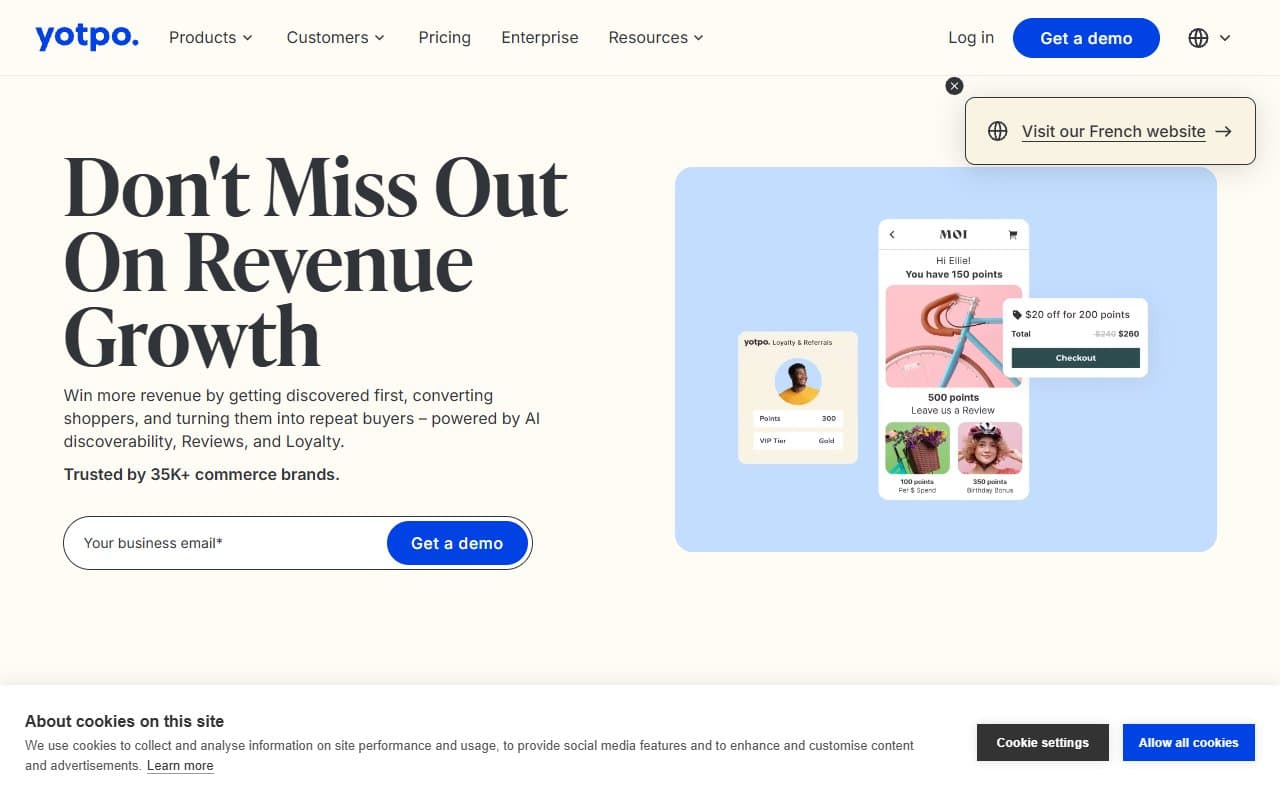
First, it collects and displays product reviews — automatically emailing customers after purchase, pulling in their responses, and showing those ratings on your product pages. That alone is table stakes now; shoppers expect it. Second, it runs a loyalty and rewards programme, so you can give customers points for purchases, referrals, social shares, or whatever behaviour you want to encourage. Third, it handles SMS marketing — promotional texts, abandoned cart nudges, post-purchase follow-ups — directly from the same platform.
The value isn't any single feature. It's that these three things talk to each other. A customer earns loyalty points, gets an SMS about their balance, and that nudge drives them back to leave a review. You build that entire loop inside one tool instead of stitching together Klaviyo, Smile.io, and Trustpilot with crossed fingers and webhook prayers.
Pricing
Yotpo's free plan exists and works, but manage your expectations. You get basic review collection with Yotpo branding on your widgets — fine for testing, not fine for a brand that cares about presentation.
The Growth tiers (starting around $15–$79/month depending on order volume) remove Yotpo branding, add automated review requests, and unlock basic loyalty features. Most small e-commerce businesses should start here.
Higher tiers — Prime and above — are where the SMS marketing and more advanced loyalty mechanics live. Pricing here scales with your SMS sends and loyalty programme size, which means costs can climb faster than expected during a busy season. Run the numbers against your actual order volume before committing. The enterprise tier is priced for brands doing serious volume and not really relevant if you're under seven figures in revenue.
The honest summary: free is a trial, Growth is where you actually start, and anything above that requires you to do the maths on whether the feature unlocks justify your specific send volumes.
What Works Well
Review velocity is genuinely impressive. The automated post-purchase email sequences pull in reviews at a rate that would take a dedicated staff member hours to replicate manually. Most store owners report their review count doubling within the first 60 days — and those reviews showing up on Google Shopping results, where the real traffic value lives.
The Shopify integration is as clean as it gets. Setup takes under an hour, the widgets drop into your product pages without developer help, and order data flows through reliably. Many integrations promise this and deliver something that needs babysitting. Yotpo's actually holds up under pressure.
Loyalty programme customization goes deeper than competitors. You can reward customers for behaviours beyond just purchasing — writing a review, following on Instagram, celebrating a birthday. That means you can build a programme that reflects how your actual customers behave, not just a generic points-per-pound system.
What Does Not Work
Pricing transparency is a genuine frustration. SMS costs are layered on top of platform fees, loyalty programme pricing scales separately, and getting a clear number out of the pricing page requires more effort than it should. You may budget one number and discover another.
Customer support below the top tiers is inconsistent. On Growth plans, support is primarily email and documentation. When something breaks — and occasionally it does — waiting 48 hours for a response while your review widgets are down is not acceptable. Larger brands on premium tiers get better access, which creates a two-tier experience that smaller businesses feel acutely.
How It Compares
Stamped.io is a legitimate alternative for pure review collection at a lower price point. Choose Stamped if reviews are your only need and loyalty doesn't factor in. Choose Yotpo the moment you want those systems connected.
Smile.io built its reputation on loyalty programmes and does that single thing excellently. If SMS marketing isn't a priority and you want best-in-class loyalty without paying for features you won't use, Smile.io wins on value. Yotpo wins when you want the full stack.
Klaviyo handles SMS and email marketing more powerfully than Yotpo's SMS tools. If you're already deep in Klaviyo and just need reviews, adding a dedicated review tool like Stamped makes more sense than switching to Yotpo's ecosystem.
The Verdict
If you run a DTC brand on Shopify with a growing customer base, real transaction volume, and a current setup involving multiple disconnected tools for reviews, loyalty, and customer communication — Yotpo is likely the most efficient consolidation you can make this year. The time saved by having one platform that handles post-purchase review requests, runs your loyalty programme, and sends SMS nudges is measurable in staff hours and visible in returning customer rates.
If you're a B2B company, a service business, or an e-commerce store still finding product-market fit, this is too much platform for where you are. Start with a dedicated review tool at lower cost and revisit Yotpo when your retention strategy becomes a real priority.
Yotpo is a mature, well-integrated platform that earns its place for the right type of business — just make sure you're that business before you commit to the billing.
Common Questions
Does Yotpo work with Shopify?
Yes, and it's one of the better-integrated tools in the Shopify ecosystem. Installation is straightforward, order data syncs reliably, and the review widgets embed on product pages without touching code. It's a native-feeling experience rather than a bolted-on one.
Is Yotpo's free plan actually usable?
For testing and early validation, yes. For a brand that cares about how its store looks, the Yotpo-branded widgets become a problem quickly. Most businesses find they need a paid tier within the first month to remove that branding and access automated review sequences.
Can Yotpo replace Klaviyo for SMS?
Partially. Yotpo's SMS tools cover the essentials — abandoned cart, post-purchase, loyalty nudges — competently. Klaviyo's SMS is more sophisticated in segmentation and automation logic. If SMS is a major revenue channel for you, Klaviyo handles it better. Yotpo's SMS is a solid addition, not a full replacement.
How long does Yotpo take to set up?
The Shopify integration and basic review collection can be live in under two hours. The loyalty programme takes longer to configure meaningfully — expect a full day to think through your programme structure, set the rewards, and test the customer-facing experience before going live.