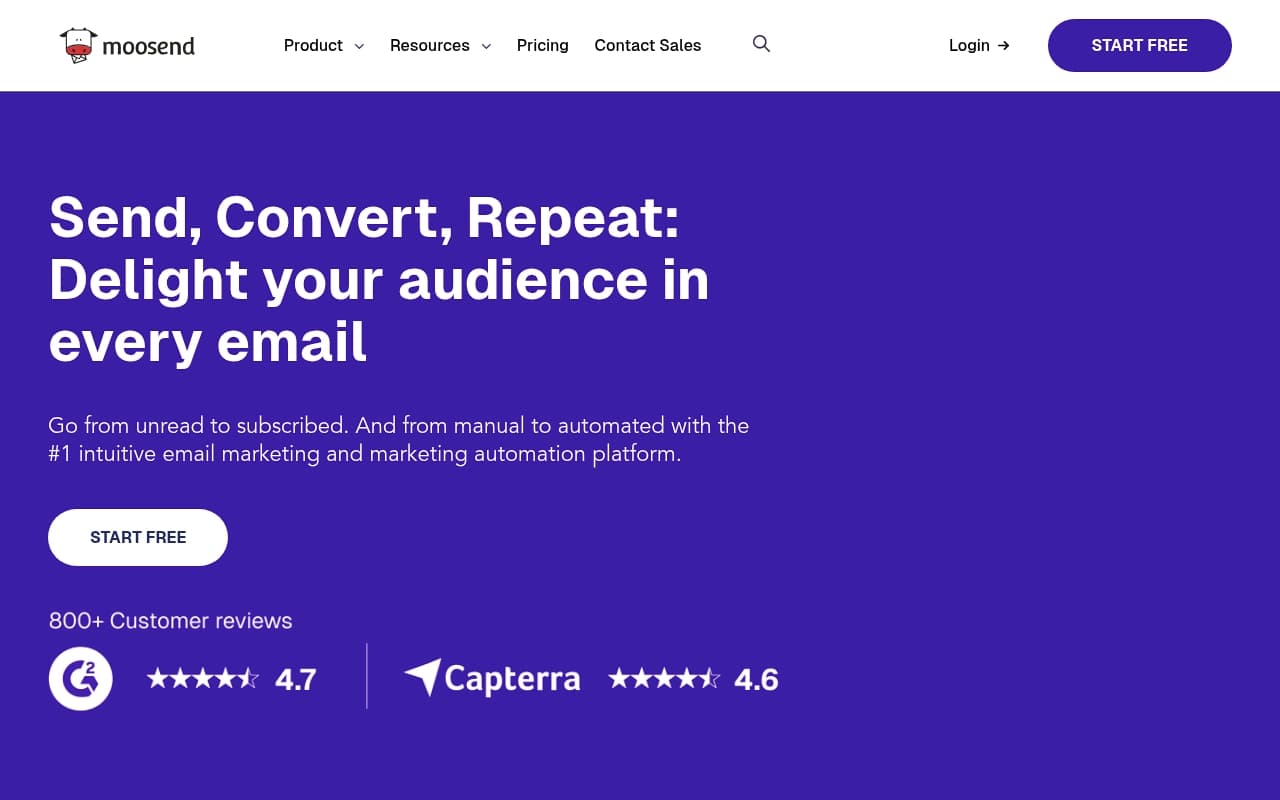
Sarah's handmade jewelry business was drowning in manual email tasks until she discovered Moosend's automation features, which now automatically send personalized welcome sequences to new subscribers and abandoned cart reminders that recovered $2,400 in lost sales last month. The drag-and-drop email builder saves her 5 hours weekly that she can now spend crafting new designs instead of wrestling with complicated email templates.
Who Should Use Moosend
Non-profits with tight budgets should look at Moosend first. You get proper automation, landing pages, and subscription forms at a price most donor-funded organizations can justify. A five-person team managing a newsletter list of 2,000 contacts and a handful of drip sequences will find Moosend handles everything without forcing you into an enterprise tier you don't need.
Small service businesses fleeing Mailchimp are another strong fit. If you have outgrown Mailchimp's free plan and balked at what their paid tiers cost once your list grew, Moosend's pricing feels almost aggressive by comparison. A freelance marketing consultant managing campaigns for three or four clients, or a boutique recruitment firm running regular candidate nurture sequences, will cover their core needs here.
Moosend fails e-commerce businesses that rely on predictive analytics — product recommendation engines or churn prediction don't exist. It also has no SMS channel at all, which rules it out immediately for any business where text messaging matters. If either describes you, look at Klaviyo or ActiveCampaign instead.
What It Actually Does
Moosend sends email campaigns and runs automated sequences based on subscriber behavior. The drag-and-drop editor builds emails from templates or from scratch. Automation workflows trigger based on actions like email opens, link clicks, or dates. Landing pages capture leads and sync with your email lists. Analytics track opens, clicks, and unsubscribes.
The platform integrates with common tools like Shopify, WordPress, and Zapier, though the integration library is smaller than Mailchimp's. Forms embed on websites to grow your subscriber list. Segmentation splits lists by behavior, demographics, or custom fields you define.
Pricing
Moosend charges by subscriber count. The entry point is $9/month for up to 500 subscribers, and that tier includes automations, landing pages, and the full editor. This isn't a crippled starter plan.
2,000 subscribers costs around $16/month and 5,000 sits at approximately $31/month. These mid-range tiers are where Moosend makes sense against competitors. You pay 40–60% less than equivalent Mailchimp plans at the same list size.
The Enterprise tier adds dedicated support and custom pricing for large lists. Most small businesses should pick whichever subscriber-count band matches their current list — features don't change between tiers, only the contact limit does.
Pick the Pro plan unless you have over 5,000 contacts. The feature set is identical across tiers.
What Works Well
The automation builder works. Setting up a five-step welcome sequence takes under thirty minutes, including conditional logic. The visual layout won't confuse someone who has never built an automation before.
Landing pages are included, not an add-on. Many platforms charge separately for landing pages or hide them behind higher tiers. Moosend includes them from the base plan, and the templates are solid enough that most businesses won't need a separate tool. That saves you $50-100/month if you're currently paying for Unbounce.
The template library is deeper than it looks. The initial selection seems modest, but filtering by industry surfaces templates that are genuinely specific rather than generic placeholders. A real estate agency and a SaaS company will find templates that require editing, not rebuilding.
What Does Not Work
Analytics are surface-level only. You get open rates and clicks, but no revenue attribution, heatmaps, or predictive reporting. If you want to know which email sequence actually drove sales last quarter, Moosend cannot tell you. For e-commerce businesses, this is a deal-breaker.
Customer support is hit-or-miss. Live chat exists on paid plans, but response times and answer quality vary wildly. Straightforward questions get resolved quickly. Anything involving automation logic gets templated responses that don't address the actual problem. You'll troubleshoot complex workflows alone.
No SMS at all. If your marketing strategy includes text messages, Moosend won't work. Period.
How It Compares
Mailchimp costs more once you leave the free tier, and the interface has grown cluttered with features most small businesses never use. Choose Moosend if price matters more than brand recognition.
ActiveCampaign offers deeper CRM integration and superior automation logic, but costs meaningfully more at every tier. Choose ActiveCampaign if your sales team lives inside a CRM and needs email behavior to sync with contact records.
Klaviyo dominates for e-commerce. Its predictive analytics and native Shopify integration are in a different class. If you run an online store, Klaviyo justifies the price premium. Moosend doesn't compete here.
The Verdict
If you're running a service business, non-profit, or content-led brand with a list under 10,000 contacts and no need for SMS or advanced e-commerce analytics, Moosend is the most rational choice at this price point. The automation tools work, the landing pages remove a separate software cost, and the pricing doesn't punish you for growing. If your business relies on text marketing or you need revenue attribution that actually holds up, go to ActiveCampaign or Klaviyo and accept the higher monthly cost. Moosend won't dazzle you, but it does the job cleanly, charges fairly, and stays out of your way.
Common Questions
Does Moosend have a free plan?
No. The lowest tier starts at $9/month for up to 500 subscribers. There's a free trial to test the platform first.
Can Moosend replace Mailchimp?
For most small businesses, yes. Email campaigns, automations, landing pages, and forms are all present. You lose Mailchimp's wider third-party integration ecosystem. Check Moosend's integration list before switching if you rely on obscure tool connections.
Is Moosend good for e-commerce?
Only for basic use cases. You can send abandoned cart emails and segment by purchase history, but predictive analytics and product recommendation features don't exist. Businesses running significant e-commerce revenue will outgrow Moosend's reporting quickly.
How hard is Moosend to learn?
Most users send their first campaign within an hour. The automation builder takes longer to master, but the visual workflow interface is logical. No technical knowledge required.