You know that customer who bought your best-selling product three times, then went quiet for two months? Right now, she's getting the same generic newsletter as someone who signed up yesterday and never bought anything. You're leaving money on the table because you can't tell the difference between a loyal customer going cold and a tire-kicker who was never serious.
Drip fixes this by watching what your customers actually do, then sending emails that respond to their behavior instead of your publishing calendar.
Who Should Use Drip
Shopify store owners doing $10,000+ monthly who still blast the same email to everyone should pay attention. Drip makes sense for the skincare founder tracking repeat customers, the subscription coffee team fighting churn, or the apparel retailer who needs different messages for different buying patterns.
Subscription businesses get the most value. When your revenue depends on preventing churn, automatically catching customers who haven't reordered in 45 days and triggering a win-back sequence protects income without manual work.
B2B service businesses should look elsewhere. Drip thinks in terms of product purchases, cart abandonment, and browsing behavior. If your deals close over phone calls and involve proposals rather than checkout buttons, you'll fight the tool constantly.
What It Does
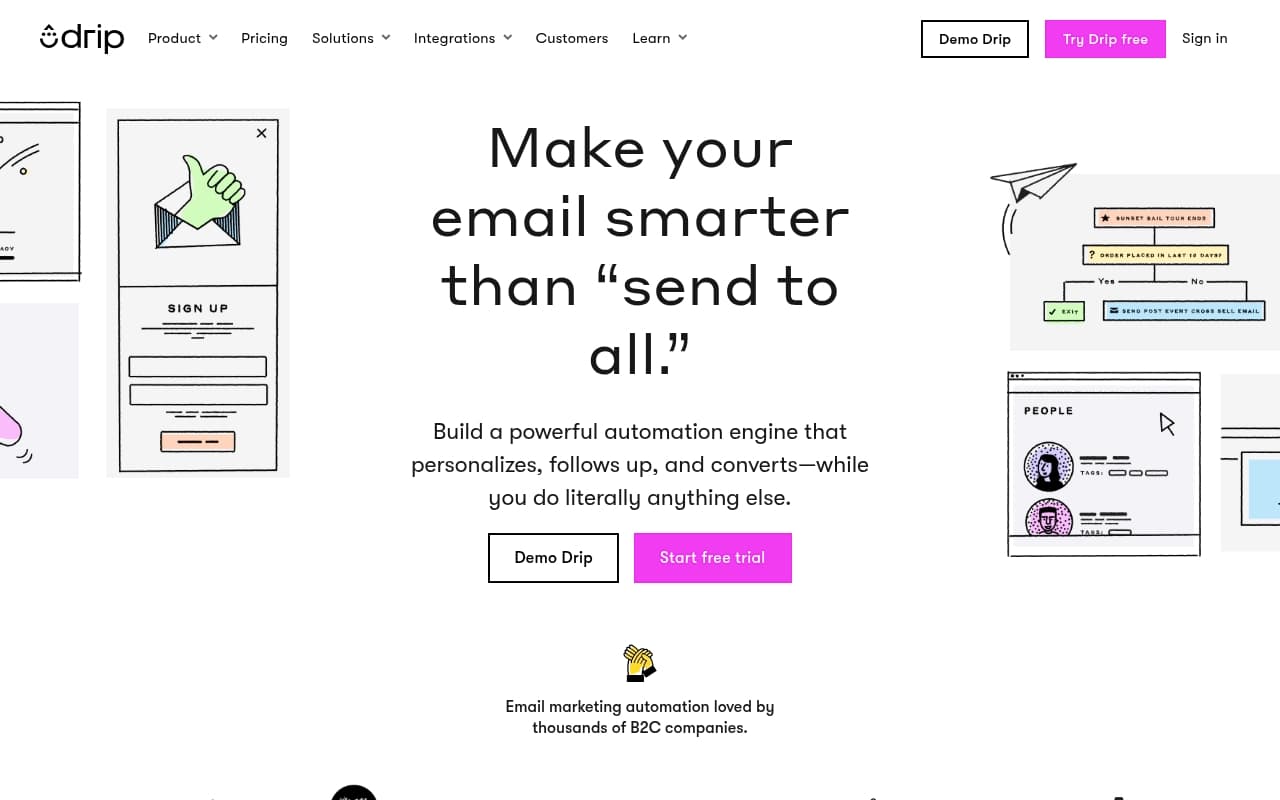
Drip connects to your store and tracks customer behavior—what they browse, buy, and when they disappear. Instead of sending emails based on dates you picked in January, you send them based on what people actually do.
Customer abandons a cart? Drip sends a follow-up automatically. Someone makes their fifth purchase? You can trigger a VIP sequence without touching anything. The CRM shows you actual revenue from each campaign, so you know which automations make money and which ones you built two years ago that nobody reads.
The Shopify integration works reliably, which matters more than it sounds. Data flows without breaking, and reliable data makes automation trustworthy.
Pricing
Drip starts at $39/month for 2,500 contacts. That base tier includes automation, email tools, and Shopify integration—no feature gates that force you into higher tiers.
At 5,000 contacts you pay $89/month. The progression continues from there. For most small retailers, these jumps are manageable if the tool drives revenue.
No free plan exists. Klaviyo offers free service up to 250 contacts, letting you test email automation before committing money. Drip asks you to pay first.
Recommendation: Start with the $39 tier if you're already spending money on email tools and want better results. If you're testing email automation for the first time, try Klaviyo's free tier first.
What Works
Revenue tracking that matters. Most email platforms report opens and clicks. Drip reports dollars. For a retailer deciding where to focus time, this changes everything—you chase revenue instead of vanity metrics.
Behavior-based segments without spreadsheets. Building a list of customers who bought specific products, spent over $200, and haven't purchased in 60 days takes four minutes. The same task in a general email tool takes hours and manual exports.
Shopify integration that survives Black Friday. The data connection stays clean under heavy traffic. Purchase events trigger automations correctly instead of disappearing into delayed queues.
What Doesn't Work
Steep learning curve for automation beginners. The workflow builder offers depth, not simplicity. First-time automation users need two to three weeks before feeling confident. The documentation helps but won't hold your hand.
Pricing punishes growth. Above 10,000 contacts, monthly costs become hard to justify. Competitors at that level offer SMS and push notifications for similar money. Drip keeps charging more for the same feature set.
How It Compares
Klaviyo covers similar ground with a free starting tier and stronger SMS features. Choose Klaviyo if you're testing email automation or need SMS integration. Choose Drip if you're already paying for email tools and want cleaner revenue attribution.
Mailchimp serves different needs. If your store is a side project to a blog or newsletter, Mailchimp simplicity works better. When your store becomes your main business and you want purchase-triggered automations, Mailchimp shows its limits quickly.
The Verdict
For Shopify stores doing consistent volume, Drip turns customer behavior into automated revenue. The attribution tracking typically justifies the cost within two months for retailers moving serious inventory. Below $5,000 monthly revenue, the price becomes harder to defend—start with Klaviyo's free tier instead.
B2B businesses, bloggers, and service companies should skip Drip entirely and examine ActiveCampaign.
For the right business, Drip replaces email guesswork with decisions you can defend with numbers.
Common Questions
Does Drip work with Shopify?
Yes. The integration is reliable—purchase events and browsing data sync consistently, making behavior-triggered automations work as advertised.
Is there a free trial?
Drip offers 14 days free, no credit card required. No permanent free plan exists.
Can it handle abandoned cart emails automatically?
Abandoned cart recovery is a core feature. You can build a multi-step sequence in under an hour, and the Shopify connection triggers it reliably.
Does Drip work for non-e-commerce businesses?
No. The platform assumes customers browse products and make purchases. Service businesses will spend time fighting assumptions that don't match how their customers actually behave.