Who Should Use Drift
You run a 10-person SaaS company. Your sales team wastes mornings chasing three-day-old form submissions while prospects sign with faster competitors. Drift fixes this: it qualifies website visitors in real time and books meetings before they remember to Google your competition.
Professional services firms get strong value here too. A 15-person management consultancy or specialist recruitment agency has deal values high enough that one extra monthly conversion pays for the tool. The direct calendar booking alone — no email ping-pong — justifies the cost.
Skip Drift if you run e-commerce, retail, or any business handling hundreds of daily support tickets. It is built for high-value B2B conversations, not volume customer service. Using it for general support is like hauling cargo in a Ferrari.
What It Actually Does
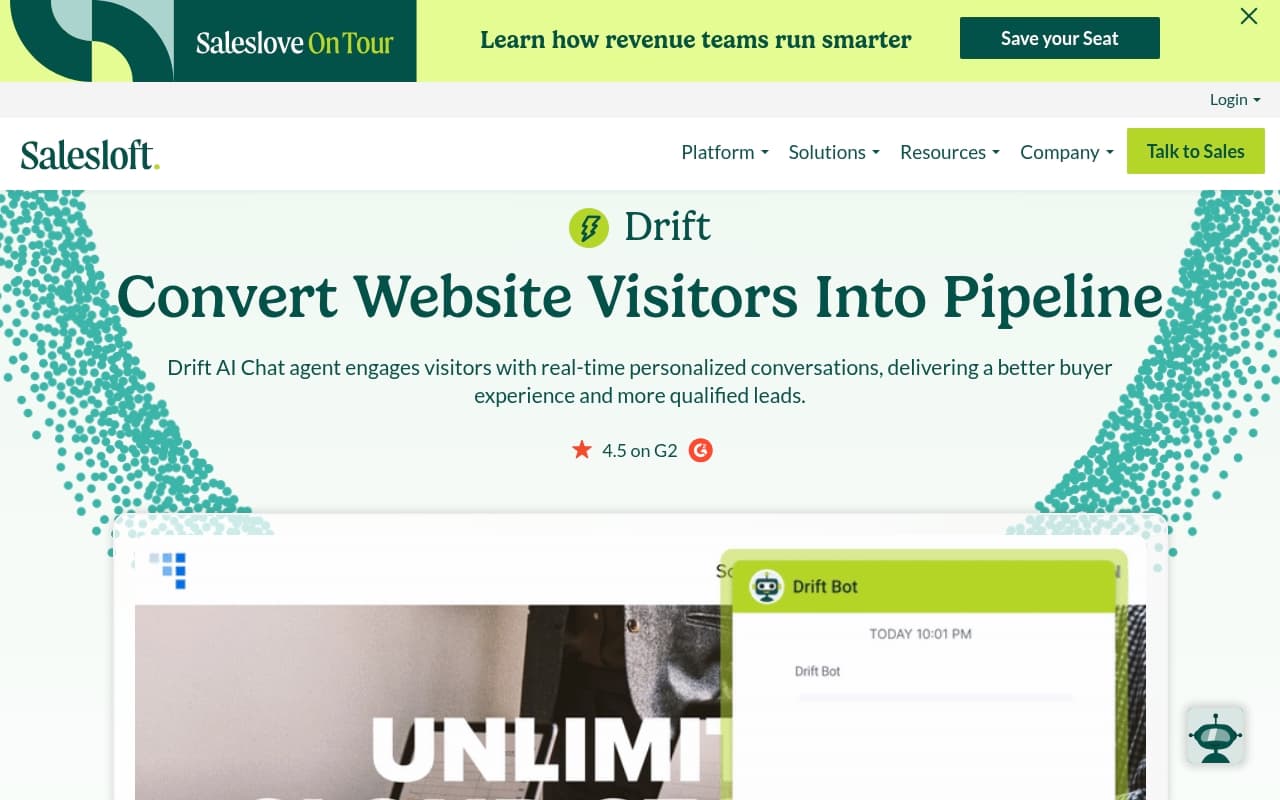
Drift puts an intelligent chat widget on your website. Unlike basic live chat tools, this one starts conversations — asking qualifying questions, routing visitors to the right people, booking meetings instead of dumping prospects into ignored contact forms.
When your sales rep is online, the chat hands off to human. When they are not, the bot handles everything. The video messaging feature lets your team send personalized video replies, which sounds gimmicky but converts cold leads surprisingly well.
CRM sync pushes conversations and contact data directly into Salesforce or HubSpot without copy-paste work. One goal drives everything: get qualified prospects into meetings fast.
Pricing
Free plan: Basic chatbot and live chat. Functional enough to test whether this concept fits your business, but no CRM connection, limited routing, and Drift branding. Treat it as a trial.
Premium tier (contact for pricing): Here is where Drift becomes expensive. CRM sync, advanced routing, and account-based targeting require a sales call and custom quote. User reports suggest this starts around $2,500 monthly — pricing that eliminates most small teams.
Growth and Enterprise tiers: For large organizations with dedicated sales ops teams.
The reality: small businesses get a proof-of-concept for free, then hit a pricing wall. Budget $3,000+ monthly before you get attached to features that matter.
What Works Well
Meeting booking that converts. Qualified visitors go from homepage to booked meeting in under three minutes. Teams report noticeably shorter gaps between first contact and first call.
Lead qualification without human involvement. The bot asks the right questions and routes based on your criteria. Five-person sales teams cover more ground because bots handle the initial filtering that used to consume mornings.
CRM sync that works under pressure. Most chat tools create duplicate contacts and missed conversations. Drift's HubSpot and Salesforce integrations keep pipeline data clean.
What Does Not Work
Pricing punishes growth. The jump from free to functional is steep and opaque. Small businesses deserve transparent pricing, not discovery calls designed to assess payment capacity.
Support quality lags the price tag. At $2,500+ monthly, you expect responsive, knowledgeable help. Users report slow response times and generic troubleshooting. When your sales pipeline runs through this tool, delays cost money.
How It Compares
Intercom covers support, marketing, and sales with transparent small-team pricing. Choose Intercom if you need customer support alongside sales conversations. Choose Drift if pipeline generation is your only focus.
Tidio costs a fraction and handles e-commerce better. It lacks Drift's sophisticated B2B routing and meeting scheduling, but covers most small retailers adequately.
The Verdict
Drift excels at one thing: turning B2B website visitors into booked sales meetings. If you run a SaaS product or professional services firm where single clients are worth thousands, the meeting scheduling and lead qualification justify serious consideration. But the pricing model fails smaller teams with sub-£1,500 monthly software budgets. Start with HubSpot CRM or Freshsales and revisit Drift when your deal volume makes the investment obvious. Drift built the right tool for the wrong price point.
Common Questions
Does Drift work for small businesses without dedicated sales teams?
Not well. Drift's value comes from routing conversations to the right human at the right moment. Without a sales team, you are paying for expensive chatbot infrastructure you do not need.
Can Drift replace my live chat tool completely?
For B2B sales, yes. For customer support or e-commerce queries, no. It handles sales conversations well and general support poorly — mixing both confuses customers.
Is the free plan actually usable?
For testing, yes. For real sales operations, no. The features that make Drift worthwhile — CRM sync, advanced routing — live behind paid tiers.
How long does setup take?
Most teams go live within a day. Basic installation requires one script on your website. Bot setup uses templates for quick functionality. CRM integration takes longer and needs your HubSpot or Salesforce admin.